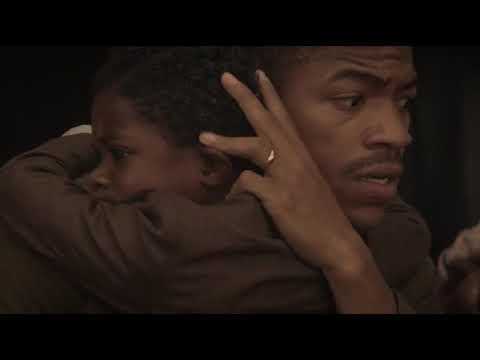
Most people know Greenwood was destroyed in 1921.
Far fewer know what happened next.
And almost nobody talks about the second destruction — the one that finished what the mob started.
This piece is about both.
The Superman Parallel Nobody Has Drawn Precisely Enough
Before we get into the history, a cultural observation worth sitting with.
The reason HBO’s Watchmen brought Greenwood to mass audience awareness in 2019 — more effectively than a century of historical scholarship had managed — is partly about the power of superhero mythology as a delivery mechanism for difficult truth.
But the specific analogy that keeps surfacing in conversations about Greenwood is the Superman origin story. And it’s worth being precise about why it works rather than just noting the surface similarity.
Krypton wasn’t destroyed by natural forces in the original origin mythology. It was destroyed by institutional failure. The Science Council refused to believe Jor-El’s warnings. The civilization was lost not because the threat was invisible but because the people with the power to respond chose not to.
Greenwood’s destruction followed the same architecture.
The tension that preceded the massacre was visible for days. Law enforcement didn’t fail to respond to the mob — it participated in the destruction and actively deputized members of it. Municipal government didn’t stand aside — it subsequently passed ordinances specifically designed to prevent Black residents from rebuilding on their own land.
The parallel extends further. Kal-El arrived on a planet that eventually celebrated him. The Greenwood survivors arrived in a post-massacre America that spent decades systematically suppressing the memory of what happened. The event was omitted from school curricula, from local histories, from the public record — not through organic forgetting but through deliberate institutional silence.
A civilization was destroyed. The survivors were told to rebuild without compensation. Then the event itself was erased from the record.
That is not an analogy to Krypton. That is Krypton with documentation.
The Insurance Betrayal — The Detail That Changes Everything
Here is the specific fact that reframes the entire post-1921 story.
Black residents filed $1.8 million in riot-related claims. Every single one was denied.
That figure in 1921 dollars represents approximately $27-35 million today. Not one claim was paid.
The mechanism of denial was precise and deliberate. Designating the event a “riot” rather than a massacre prevented insurance companies from having to pay benefits to Greenwood residents whose homes and businesses were destroyed.
The naming decision — riot versus massacre — was not semantic disagreement. It was a financial instrument. The legal classification of the event was specifically chosen to void insurance obligations across the board.
That is not negligence. That is architecture.
One exception exists in the record — a white business owner was compensated for damages. Black claimants were denied uniformly.
And then — while insurance claims were being denied — the city moved to ensure the situation couldn’t be corrected legally.
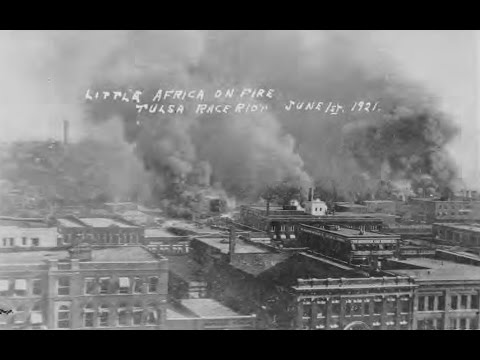
A new Fire Ordinance — No. 2156 — was passed specifically to prevent most victims from rebuilding on their own land. The legal challenge to this ordinance was led by Buck Colbert Franklin — father of the late historian John Hope Franklin, professor emeritus at Duke University and one of America’s most celebrated scholars of Black history.
Sit with that for a moment. The father of one of America’s most important historians was arguing insurance claims and fighting municipal ordinances in the rubble of Greenwood in 1921. That lineage — from Buck Colbert Franklin in the ashes to John Hope Franklin in the archives — is itself the story of how Black intellectual capital gets forged under conditions of systematic destruction.
What They Built Anyway
Here is the part of the Greenwood story that almost never gets told.
“Many people only know that Black Wall Street was destroyed, not that by '27 we had hundreds of Black owned businesses and more homes in the Greenwood district,” said Michelle Burdex, Program Coordinator for the Greenwood Cultural Center.
Within six years. Without insurance payments. Without government assistance. Against active municipal obstruction.
City and County officials and the Tulsa Chamber of Commerce sought to capitalize on the Greenwood community’s losses by making every effort to prevent reconstruction. None of the survivors were able to collect on their insurance claims. Residents had to rebuild Greenwood entirely on their own.
Municipal authorities acted initially to impede rebuilding. Though some individual white Tulsans provided assistance, it was the American Red Cross that provided the most sustained outside relief effort.
The community rebuilt anyway.
By the late 1920s Greenwood had recovered significant commercial vitality. Through the 1930s and into the 1940s it continued to function as a self-sustaining Black economic district — not at the pre-massacre peak, because the insurance denial and the rebuilding burden had permanently altered the capital structure, but as a genuine functioning community economy.
That resilience is remarkable. It is also the part of the story that gets weaponized — the “they rebuilt” narrative used to suggest that the destruction was therefore not so consequential. That framing is dishonest in a specific way.
Rebuilding without compensation, without the original capital base, without the institutional infrastructure that had accumulated over decades — that is not recovery. That is starting over under permanent structural disadvantage while the people who destroyed your assets face no accountability and retain the compounded benefits of what they took.
The Second Destruction
This is the part that is almost never discussed.
Greenwood was destroyed twice.
The first destruction was the 1921 massacre — violent, immediate, and total.
The second destruction was slower, more bureaucratic, and in some ways more complete.
Integration — the hard-won legal and social achievement of the civil rights era — paradoxically accelerated Greenwood’s commercial decline. As Black residents gained legal access to white-owned businesses, restaurants, hotels, and professional services, the dollars that had previously circulated within Greenwood began flowing outward. The economic self-containment that had made Greenwood prosperous was a product of forced segregation. Integration removed the segregation without replacing the economic infrastructure that segregation had inadvertently produced.
This is not an argument against integration. It is an observation about the economic consequence of removing a structural condition without addressing the economic architecture it had produced. The policy conversation that should have happened — how do you preserve Black economic concentration voluntarily when the legal compulsion that created it is removed — largely didn’t happen.
Then urban renewal delivered the decisive blow.
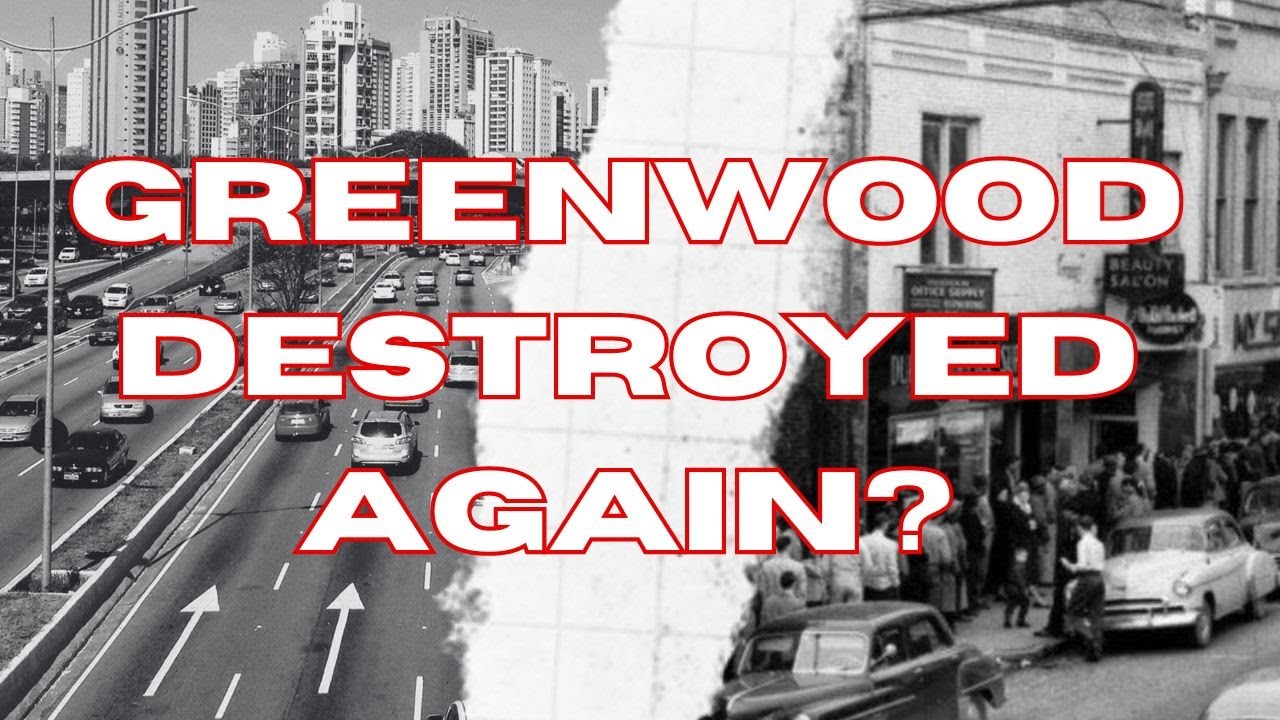
The I-244 highway was built directly through the Greenwood District. The physical infrastructure of what the community had rebuilt — twice now, counting the post-massacre reconstruction — was demolished to make way for a highway that served the broader Tulsa metropolitan area.
Highway placement through Black communities was not a local decision or an accident. It was a documented national pattern of urban renewal policy. Robert Moses in New York. The destruction of Rondo in St. Paul. Overtown in Miami. The West End in Atlanta. Black communities across America were systematically selected as highway corridors because their residents had the least political power to resist and their property had been deliberately suppressed in value by the same redlining policies that made them targets.
Greenwood was destroyed by a mob in 1921.
Then it was destroyed by a highway in the 1960s.
The mob was prosecuted exactly as the insurance companies were — which is to say not at all.
Why We Don’t Know the Specifics
Your question about why the specifics remain obscure deserves a direct answer because the obscurity was not organic.
For decades after the massacre there was silence about what happened. Few in Tulsa learned about it at school. Or at church. Or at family dinner tables.
That silence was produced. Actively. Through specific decisions by specific institutions.
The event was classified as a riot — which minimized its scale and shifted implicit responsibility toward its victims. It was omitted from local school curricula for decades. The photographs that documented the destruction — some of which were turned into postcards sold to white Tulsans as souvenirs — were suppressed or lost. The commission that finally investigated the massacre comprehensively wasn’t convened until 2001 — eighty years after the event.
The 45,000 pages of Greenwood property records that the City of Tulsa recently announced it would release — as part of its 2025 reparations commitment — have existed in municipal archives throughout that entire period. The information was always there. The decision about whether to surface it was political.
This is the Krypton parallel in its most direct form. The civilization was destroyed and then the record of the civilization was suppressed. The survivors carried the memory. The institutions maintained the silence.
What broke the silence was not a change of heart. It was a combination of centennial commemoration pressure, the Watchmen cultural moment, and the decision by the last surviving witnesses — at ages exceeding 100 years — to pursue legal accountability before they died.
Where Things Actually Stand
The legal avenue closed in 2024 when the Oklahoma Supreme Court upheld the dismissal of the survivors’ lawsuit. The court acknowledged the legitimacy of the grievances and still dismissed the case on technical legal grounds.
But something else happened in 2025 that deserves attention.
The City of Tulsa announced a reparations commitment — $24 million for housing, $60 million for historic preservation, and $21 million for land acquisition, small business grants, and scholarships. The mayor acknowledged publicly that no insurance claims were ever paid and that every promise made to help rebuild Greenwood in 1921 was broken.
That acknowledgment matters. Not because $105 million resolves a claim whose compounded value is orders of magnitude larger. But because a sitting mayor of Tulsa has now stated on the record that the institution he leads made promises it didn’t keep, denied claims it owed, and participated in the suppression of a community’s economic recovery.
That is the institutional acknowledgment that the BWO estate claim framework identifies as the necessary precondition for serious accounting. The liability has been implicitly admitted. What remains is the methodology for calculating what it’s actually worth.
The BWO Observation
Greenwood was not a miracle. It was not exceptional Black resilience overcoming impossible odds — though it was that too.
It was proof of concept.
It demonstrated precisely what Black economic self-determination produces when permitted to operate. It was destroyed not by market failure or by any organic economic process but by organized violence followed by systematic institutional obstruction followed by government infrastructure policy.
Three distinct mechanisms across four decades.
The question BWO keeps returning to is simple.
If the proof of concept worked — if Greenwood demonstrated by 1921 that Black economic self-determination produces institutional infrastructure of genuine sophistication — what does the compounded value of that demonstration represent today?
And who holds the liability for its interruption?
The bill has always existed.
Greenwood is where it was written.
Discussion Questions:
The city’s $105 million reparations commitment represents a fraction of the calculated compounded loss. Is partial acknowledgment with inadequate compensation better or worse than no acknowledgment?
The “riot” versus “massacre” naming was specifically chosen to void insurance obligations. Should insurance companies whose predecessor institutions denied those 1921 claims bear current liability?
The second destruction — the highway — was government policy. Does that create a separate and distinct liability from the 1921 massacre itself?
Buck Colbert Franklin fought the insurance denials in 1921. His son John Hope Franklin became one of America’s most important historians of Black life. What does that lineage tell us about how Black communities convert economic destruction into intellectual capital — and what is the economic cost of that conversion?