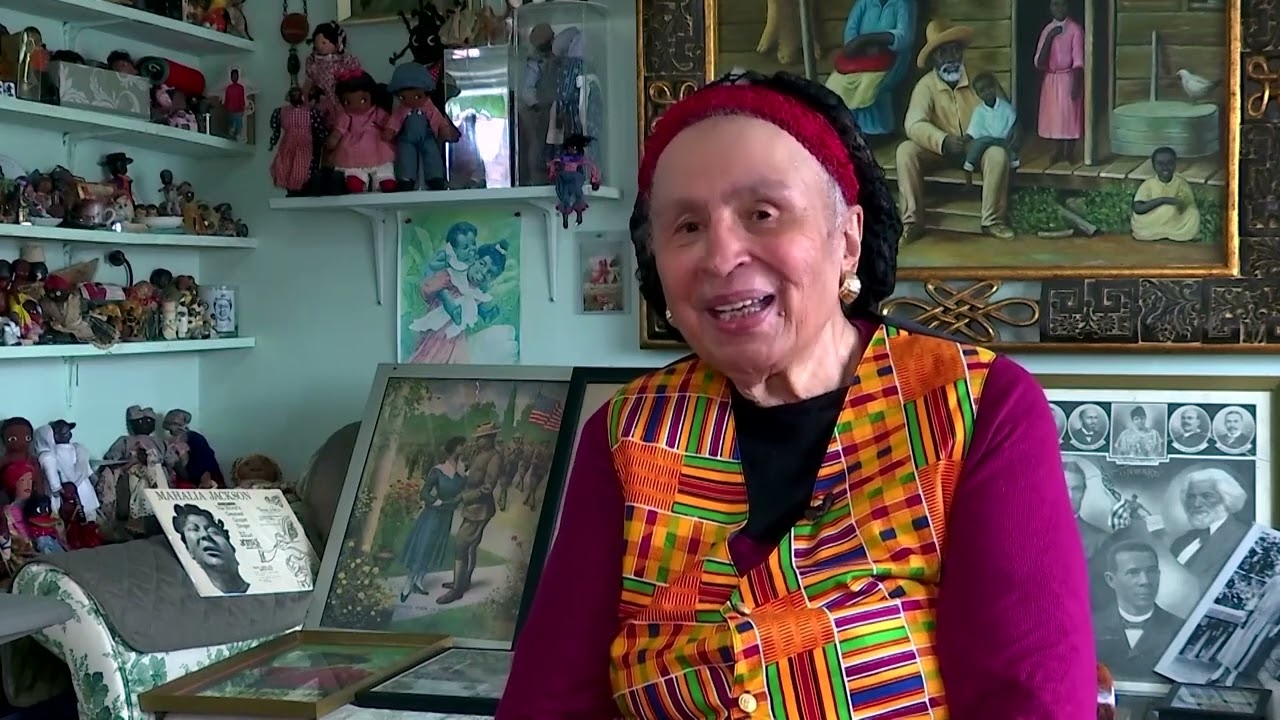
There’s a conversation that keeps getting avoided when it comes to Black Americana.
Not the emotional one.
Not the moral one.
The economic one.
Because when most people hear “Black Americana,” they think of two completely different things—and they don’t reconcile them.
On one end:
-
Mammy figurines
-
Minstrel imagery
-
Dehumanizing advertisements
On the other:
-
Ebony and Jet magazines
-
Jackie Robinson and Jack Johnson memorabilia
-
Civil rights photography
-
Black-owned cultural output
And here’s the uncomfortable truth:
Both of these live in the same marketplace.
Two Narratives. One Market.
Black Americana is not a unified category. It’s a split archive.
1. The Caricature Economy
The first category is what most people recoil from—and rightfully so.
These are artifacts that:
-
Flatten Black identity
-
Normalize servitude
-
Package racism as nostalgia
But here’s what rarely gets said:
These items were not just cultural—they were commercial.
They were:
-
Mass-produced
-
Widely distributed
-
Financially successful
They represent an early form of monetized Black imagery—just not controlled by Black people.
2. The Counter-Narrative Economy
Then you have the other side.
Publications like Ebony and Jet didn’t just document Black life—they corrected the record.
-
They showed dignity where mainstream media showed distortion
-
They documented history when others erased it
-
They created a parallel information economy
And figures like Jackie Robinson and Jack Johnson?
They weren’t just athletes.
They were market disruptors.
Their memorabilia represents:
-
Barrier-breaking moments
-
Cultural legitimacy
-
Black excellence as a collectible asset
The Real Issue Isn’t the Content—It’s the Control
If both sides exist in the same marketplace, the real question becomes:
Who owns the narrative—and who profits from it?
Because right now:
-
Racist artifacts are collected, cataloged, and sold
-
Black achievement artifacts are also collected—but often undervalued relative to their cultural weight
And in many cases:
- Neither market is systematically controlled by Black institutions
Undervalued, Underbuilt, Underleveraged
This is where the BWO lens comes in.
Black Americana is not just history.
It is a fragmented asset class.
And like most things tied to Black cultural output, it has been:
-
Undervalued → not priced in proportion to its cultural impact
-
Underbuilt → no dominant Black-owned marketplace or exchange
-
Underleveraged → limited use in licensing, digitization, or institutional archiving
Meanwhile, other cultural markets:
-
Vintage sports cards
-
Classic film memorabilia
-
Music catalogs
Have been:
-
Aggregated
-
Financialized
-
Institutionalized
The Same Pattern, Different Category
If this sounds familiar, it should.
It’s the same pattern seen in:
-
Music
-
Fashion
-
Film
-
Language
Black culture creates value.
The market underestimates it.
Then later, someone else structures and monetizes it.
Black Americana is just a slower-moving version of the same cycle.
The Site Question: What Are We Looking At?
When you look at sites that sell “Black Americana,” you’ll often see both categories side by side:
-
Caricature artifacts
-
Historical items
-
Neutral collectibles
That’s not accidental.
That’s the market saying:
“We’re not here to interpret—just to transact.”
But that neutrality raises a problem:
If the market doesn’t differentiate value beyond price…who defines meaning?
A Different Approach: From Reaction to Ownership
The default response has been:
-
Reject the offensive
-
Celebrate the positive
But that’s incomplete.
Because it doesn’t address:
-
Ownership
-
Infrastructure
-
Market control
A more strategic approach would be:
1. Curate with Intent
-
Separate categories clearly
-
Contextualize, not erase
-
Control presentation
2. Aggregate the Assets
-
Build centralized archives
-
Digitize collections
-
Create searchable, monetizable databases
3. Monetize the Narrative
-
Licensing historical imagery
-
Producing documentaries and educational content
-
Creating Black-owned marketplaces for collectors
The Missed Opportunity
Right now, Black Americana exists as:
-
A niche collector’s market
-
A historical curiosity
-
A fragmented archive
But it could be:
A structured cultural asset ecosystem
With:
-
Institutional ownership
-
Market liquidity
-
Narrative control
Final Position
Black Americana is not just about what was created in the past.
It’s about what’s being priced, preserved, and profited from in the present.
And until that shifts, the pattern will remain the same:
Black culture creates the value.
The market underestimates it.
And someone else builds the system around it.