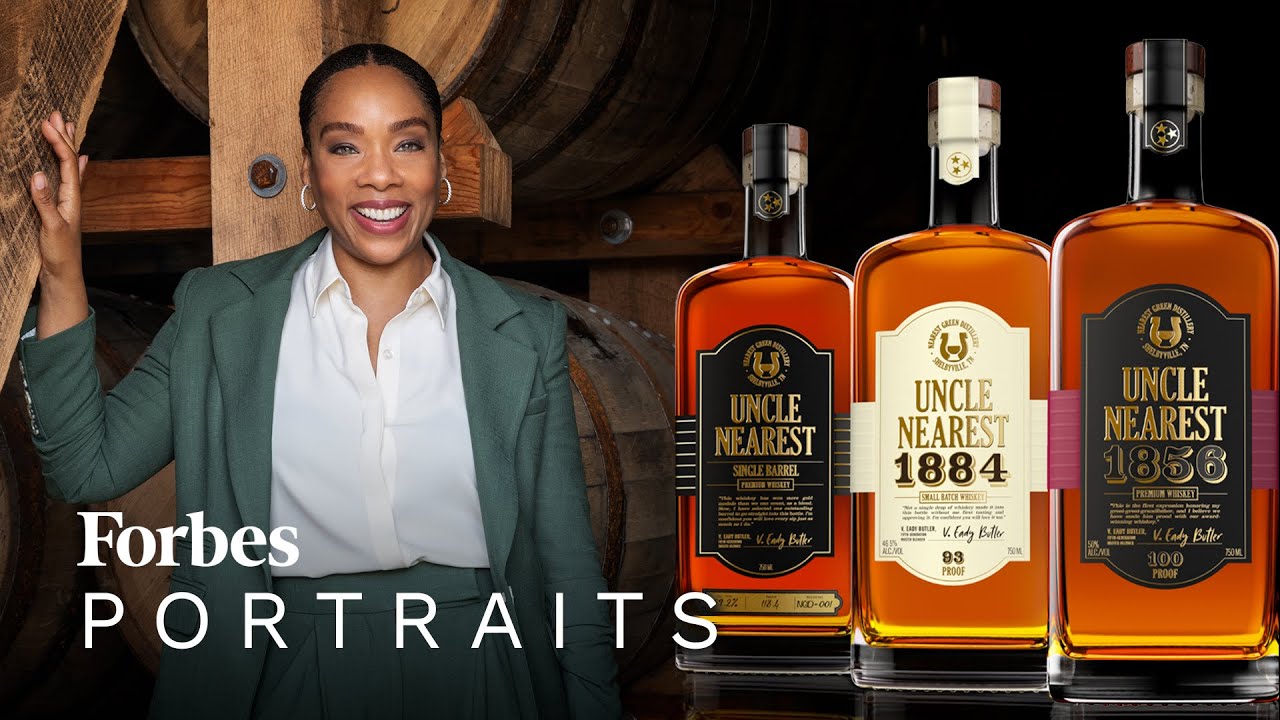
In 19th-century Tennessee, a formerly enslaved man named Nathan ‘Nearest’ Green played a central role in developing the distillation process behind what would become one of the most recognized whiskey brands in the world: Jack Daniel’s.
His expertise shaped the product.
His technique became foundational.
But for over a century, the economic upside—brand equity, global recognition, and generational wealth—was not associated with his name.
Only recently has that story begun to be formally acknowledged, alongside the emergence of the Uncle Nearest whiskey brand, which attempts to reinsert his legacy into the market.
The delay is instructive.
Recognition can be retroactive.
Ownership cannot.
A Pattern That Repeats
This is not an isolated case.
It is a pattern.
Across time, Black creativity, innovation, and cultural influence have consistently generated:
-
Products
-
Trends
-
Language
-
Aesthetics
-
Entire market categories
But the ownership of those outputs has often been disconnected from their origin.
The mechanism changes.
The outcome remains familiar.
From Distillation to Digital
Fast forward to the modern era.
Platforms like Twitter experienced exponential growth not only through technology—but through culture.
“Black Twitter” became an informal but widely recognized engine of:
-
Humor
-
Commentary
-
Virality
-
Linguistic innovation
-
Real-time cultural relevance
Entire news cycles, marketing campaigns, and platform engagement strategies were shaped by this activity.
But again, the structure remained the same:
Cultural input was supplied.
Platform ownership remained elsewhere.
The Monetization of Aesthetics
More recently, cultural waves—sometimes labeled informally as trends like “tendernism”—have demonstrated how quickly identity, tone, and aesthetic sensibilities can be packaged, amplified, and monetized.
These moments feel new because of their speed.
But structurally, they follow a familiar trajectory:
-
Cultural expression emerges organically
-
It gains traction within a core community
-
It is adopted, reinterpreted, and scaled
-
The financial upside is captured by those controlling platforms, brands, or distribution
The cycle is efficient.
And it is repeatable.
The Core Issue Is Not Creativity—It Is Conversion
Black communities have never lacked creativity, influence, or innovation.
What has been inconsistent is the ability to convert those inputs into structured ownership.
-
Skills were present (Nearest Green)
-
Culture was present (Black Twitter)
-
Aesthetics were present (viral trends)
But the systems required to capture value at scale were either absent—or externally controlled.
The issue is not production.
It is positioning.
Defining Cultural Asset Trusts (CAT)
Cultural Asset Trusts (CAT) emerge as a response to this recurring gap.
They are not symbolic.
They are structural.
A Cultural Asset Trust is a framework designed to convert cultural influence into pooled ownership, equity positions, and long-term asset control.
Instead of allowing value to dissipate outward, CAT introduces mechanisms to:
-
Aggregate participation
-
Retain ownership stakes
-
Align cultural production with capital formation
What Changes Under a CAT Model
Under traditional structures:
-
Culture drives attention
-
Attention drives revenue
-
Revenue accrues to platform or brand owners
Under a CAT-aligned structure:
-
Culture drives attention
-
Attention is organized into collective leverage
-
Leverage is converted into ownership positions
This is not theoretical.
It is a reordering of existing economic relationships.
From Legacy Correction to Real-Time Positioning
The story of Nathan ‘Nearest’ Green required more than a century to be revisited.
Modern cultural phenomena unfold in real time.
The question is no longer whether contributions will be recognized.
The question is whether ownership will be established at the moment value is created.
Conclusion: Breaking the Cycle
Across generations, the pattern has been consistent:
-
Create
-
Influence
-
Amplify
-
Displace
Cultural Asset Trusts are designed to interrupt that sequence.
Not by changing what is created—
but by changing what is owned.
From delayed recognition…
to immediate positioning.
From cultural contribution…
to capital participation.
From influence…
to infrastructure.