Companion thread to “1 Million People Applied to Streamer University. None of Them Learned This.”
1,000,000 people applied for 120 spots at Kai Cenat’s Streamer University — a lower acceptance rate than Harvard. Every one of those applicants was chasing exposure. This thread is about the thing none of them were taught: how to actually own a piece of what fame generates, not just chase the fame itself.
Two parts here: what the actual investment product is, in plain language — and the “LLC first, ownership second” framework for anyone building their own audience.
Part 1: What a Channel Revenue Token Actually Is
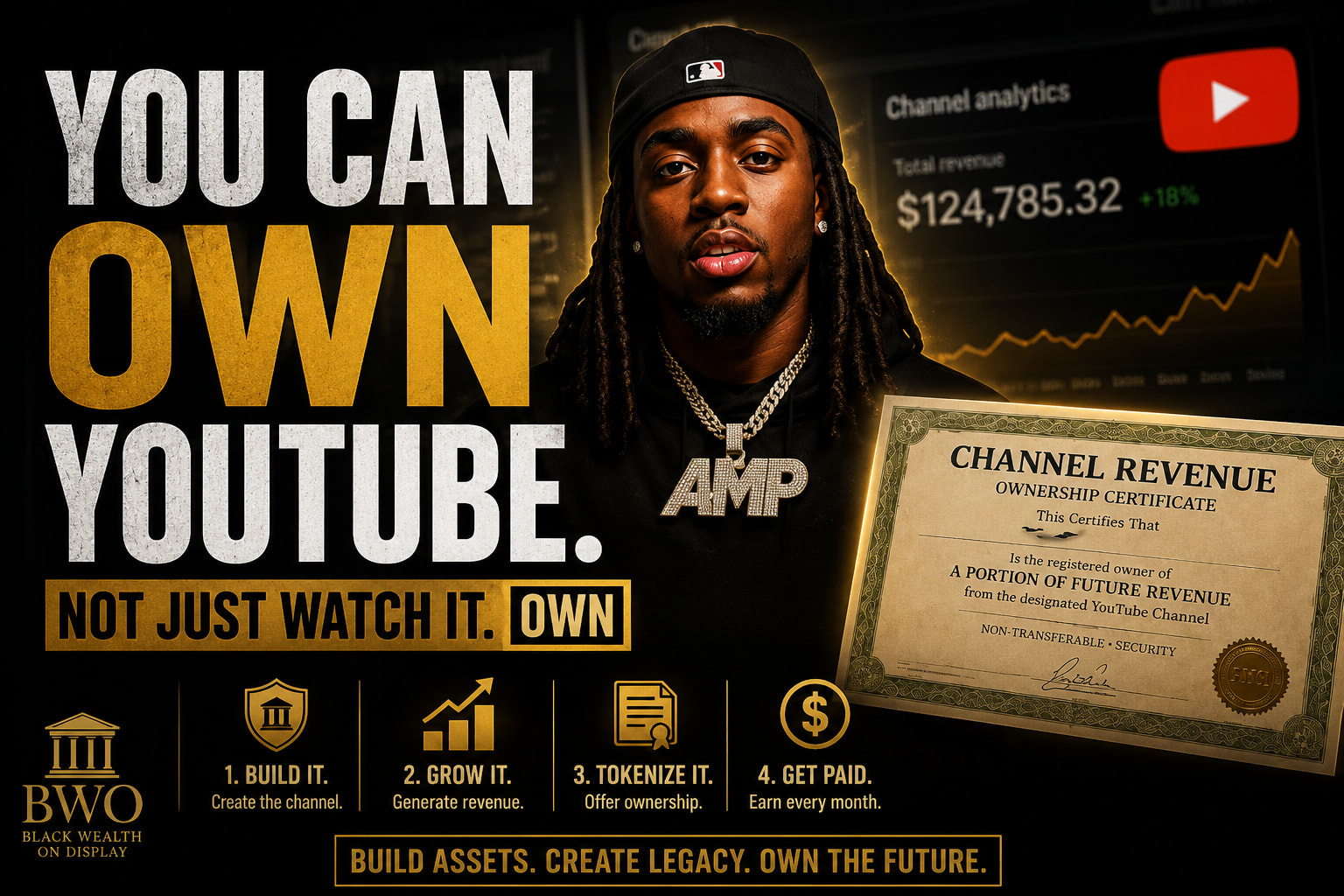
The plain-language version: A YouTube creator offers investors a slice of their future ad revenue. You buy in starting at $100. Every month the channel earns ad money, you get your cut, paid automatically.
The platform: GigaStar Market. It’s an SEC-registered funding portal and a FINRA member, offering these as securities under Regulation Crowdfunding (Reg CF) — not crypto, not a donation, not an unregulated side deal. It’s open to anyone 18+, not just accredited investors.
What you’re actually buying: A right to a percentage of a specific creator’s monthly YouTube ad revenue. You do not own any part of the channel, the brand, or the content itself — no equity, no creative control. It’s a contractual revenue share, full stop.
The real numbers, so you know this isn’t vaporware: as of recent platform disclosures, roughly 28,000+ investor accounts, dozens of creator offerings listed, and several million dollars raised and distributed to CRT holders to date. This is a real, operating platform with an actual track record — not a pitch deck.
The Full Risk Picture — Read This Part Twice
The video kept this section honest but brief. Here it is in full, because you should never put money into something you don’t understand the downside of:
- This is speculative and illiquid. Your money is locked in for a minimum of 12 months before you can even attempt to resell your position on the secondary market.
- There’s no guarantee of a liquid secondary market even after 12 months. You may not be able to sell your position when you want to.
- Your payout is 100% tied to that one creator’s channel performance. If their revenue drops, your distribution drops with it. If the channel dies, your income from it dies too.
- You can lose the entire investment. This is not a savings account, not a bond, not anything resembling guaranteed income.
- GigaStar doesn’t manage your money or pick investments for you. You choose which specific creator offering to buy into, and you bear the risk of that specific choice — this isn’t diversified exposure, it’s a bet on one channel.
Treat every dollar you put into a CRT like you’d treat a real security with real downside — because that’s exactly what it is.
Part 2: LLC First, Ownership Second
This is the framework for anyone building their own audience — not just people investing in someone else’s.
Why “LLC first”: Before you structure any kind of revenue-share, ownership stake, or investment offering around your own content, you need the entity that will actually hold it. Same logic as the Ryan Clark plan’s Step 2 — the container comes before what goes in the container. If you try to structure ownership around yourself personally rather than an entity, you’re mixing personal and business liability, and you have no clean structure to eventually offer anyone else a stake in.
Why “ownership second”: Once the entity exists, that’s when you can actually think about whether — and how — to let others own a piece of your revenue. That could look like:
- A formal Reg CF offering of your own, structured through a platform like GigaStar, if your channel has real, provable revenue history.
- A private revenue-share agreement with early collaborators or investors, properly documented through your entity.
- Simply keeping 100% ownership and using the entity purely for asset protection and tax structure — “ownership second” doesn’t mean you’re obligated to sell any of it.
The core distinction the whole video is built on: Kai Cenat owns the brand, the format, the IP behind Streamer University. The 120 students who go through it leave with exposure — he leaves with an asset he can run again next year. Exposure isn’t ownership. A following isn’t equity. Whatever you’re building, ask yourself the same question the video asks: when this gets big, what happens to the money?
If You’re Evaluating Someone Else’s CRT Offering
A few questions worth answering before you put money into any specific creator’s offering:
- How long has the channel had consistent revenue, not just a viral spike? One good month isn’t a track record.
- What’s the actual revenue-share percentage and term length — read the specific offering page and Form C, don’t just go off the pitch.
- Is the channel’s content style durable, or dependent on a format/trend that could fade? Your payout depends entirely on that channel’s future, not its past.
- Can you afford to lose 100% of what you put in? If the answer is no, this isn’t the vehicle for that money.
The Bottom Line
One million people wanted a seat at Streamer University to learn how to get famous. You just learned something worth more: how to own a piece of what fame actually generates — or how to structure your own audience so you’re the one who owns it, not just the one who’s building it for someone else.
Drop your questions below — especially if you’re looking at a specific CRT offering and want a gut-check, or if you’re mid-process setting up your own entity. This thread works best as an ongoing resource, not a one-time read.
Discussed in the video: “1 Million People Applied to Streamer University. None of Them Learned This.” — link in the pinned post above.