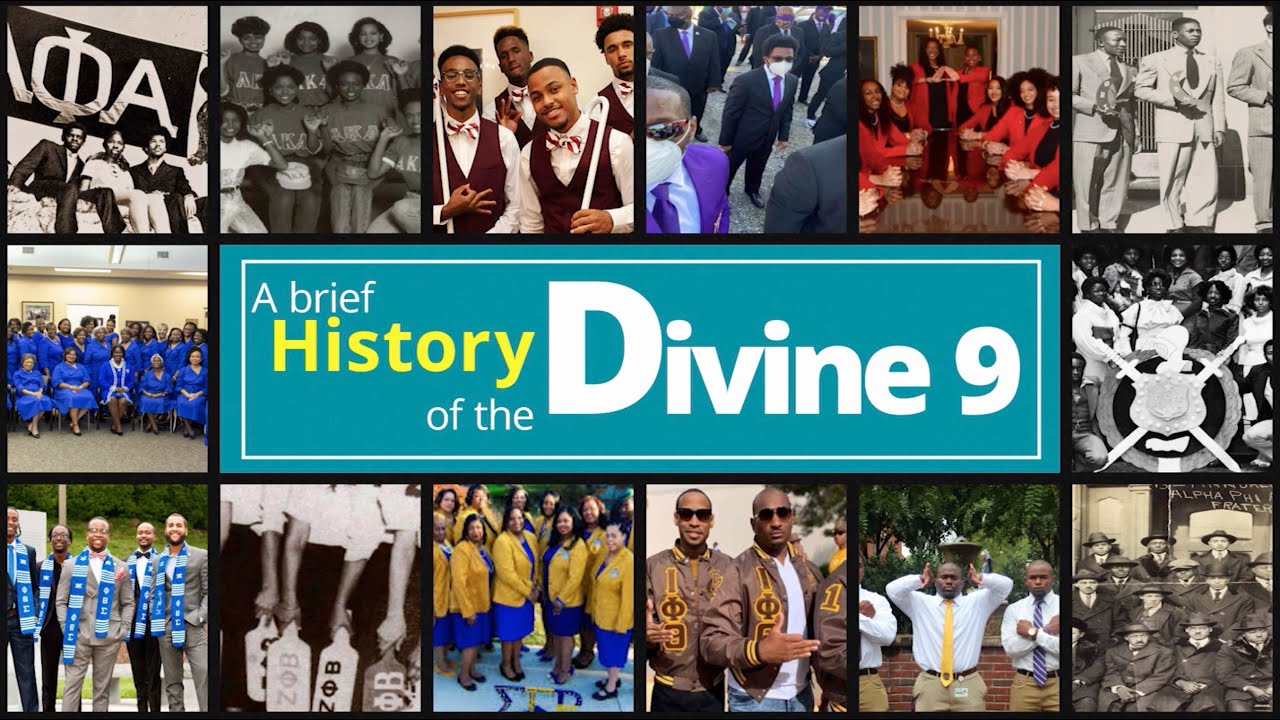
Across the United States, one of the most structured and enduring Black institutional networks is not found in financial firms, political organizations, or even religious centers.
It exists in plain sight—within the nine historically Black fraternities and sororities that comprise the National Pan-Hellenic Council, commonly referred to as the Divine Nine.
These organizations represent:
-
Multi-generational membership
-
National and international reach
-
Deep ties to both HBCUs and predominantly white institutions (PWIs)
-
Concentrations of professionals across law, medicine, finance, education, and public service
By any structural definition, they are not simply social organizations.
They are distributed institutional networks.
A Built-In National Infrastructure
Each Divine Nine organization maintains:
-
National headquarters
-
Regional and local chapters
-
Alumni networks
-
Governance structures
-
Regular convenings and coordinated initiatives
Collectively, through the National Pan-Hellenic Council, they also possess a formal mechanism for inter-organizational coordination.
This is significant.
Because most communities spend decades attempting to build the very thing these organizations already have:
A pre-existing, trust-based, national network of aligned individuals.
Social Capital Without Economic Integration
Despite this infrastructure, the primary outputs of these organizations have historically centered around:
-
Community service
-
Voter mobilization initiatives
-
Scholarship and educational support
-
Social and cultural programming
These are meaningful contributions.
But they largely operate within the domain of social capital, not economic capital formation.
The network exists.
The coordination exists.
But the economic layer remains underdeveloped.
The Structural Opportunity
From an institutional perspective, the Divine Nine possesses several characteristics that are rarely concentrated within a single network:
-
High levels of internal trust
-
Professional diversity across industries
-
Geographic distribution across major U.S. markets
-
Established communication channels
-
Cultural cohesion and identity
In other contexts, these ingredients typically lead to:
-
Investment syndicates
-
Business incubators
-
Private capital pools
-
Strategic partnerships across industries
The question is not whether the Divine Nine has the capacity to support such structures.
The question is why those structures have not been fully realized at scale.
HBCUs, PWIs, and Network Continuity
A unique strength of the Divine Nine is its dual-rooted ecosystem:
-
Origin points in historically Black colleges and universities (HBCUs)
-
Continued expansion across predominantly white institutions (PWIs)
This creates a rare form of network continuity:
-
Cultural grounding at HBCUs
-
Institutional access at PWIs
-
Professional integration across sectors
Few organizations possess this level of cross-environment connectivity.
And yet, connectivity alone does not produce capital.
Connectivity must be organized to become leverage.
From Brotherhood to Balance Sheet
What would it look like to extend the Divine Nine’s institutional function beyond service and social engagement into structured economic activity?
Potential pathways include:
-
Alumni-based investment collectives
-
Chapter-aligned business directories and procurement networks
-
Cross-fraternity/sorority venture partnerships
-
Real estate acquisition groups tied to regional chapters
-
Insurance and risk-pooling frameworks aligned with membership bases
None of these require reinvention.
They require coordination, intent, and infrastructure alignment.
Beyond Symbolism
The Divine Nine already represents:
-
Legacy
-
Achievement
-
Cultural prestige
But institutional power is ultimately measured not by symbolism—but by asset control, capital flow, and economic durability.
The transition from symbolic influence to economic influence is not automatic.
It is designed.
Conclusion: A Network Waiting to Be Activated
The infrastructure exists.
The membership exists.
The trust exists.
What remains is the alignment of these elements into a cohesive economic framework.
Not as a replacement for the organizations’ existing missions—
but as an extension of them.
From coordinated service…
to coordinated capital.
From shared identity…
to shared ownership.
From network…
to system.