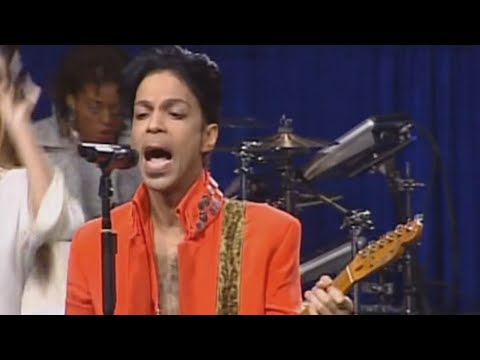
On June 4, 2026, the Prince Estate announced Timeless — a 10-track collection of previously unreleased recordings arriving August 28, through a partnership with Sony’s Legacy Recordings.
The tracks span 1977 through 2016. Nearly four decades of creative output that sat in a vault at Paisley Park while the world consumed everything Prince chose to release publicly.
Music industry veteran Damion “Damizza” Young — former programming director of Power 106 and Hot 97, the man credited with reuniting Dr. Dre and Snoop Dogg for Chronic 2001, and one of the most influential figures in hip-hop radio history — put it precisely: Prince didn’t just leave behind a catalog. He left behind a universe.
That distinction is the entire BWO argument about cultural asset ownership made concrete.
What Prince Actually Built
Most artists negotiate with labels for the best advance they can get, deliver albums on schedule, and accept the standard terms — the label owns the masters, the artist receives royalties on a percentage basis, and the relationship is essentially one of creative employee to institutional owner.
Prince refused that model consistently, publicly, and at significant personal and commercial cost.
He changed his name to an unpronounceable symbol rather than continue delivering work to Warner Bros. under what he considered exploitative terms. He wrote “slave” on his face at public appearances. He released music directly to consumers before the infrastructure to do so efficiently existed. He gave away albums with newspaper subscriptions, through concert tickets, through channels that circumvented label control entirely.
None of this was irrational behavior from an eccentric artist. It was a deliberate, sustained strategy to retain ownership of his creative output at a time when the industry’s entire financial model was built on extracting that ownership from artists at the point of their greatest leverage — the initial deal.
The result of that strategy is sitting in Paisley Park right now.
The Vault as Capital Asset
The Timeless announcement gives us a rare opportunity to examine the vault not as mythology but as a financial instrument.
A deluxe boxset focused solely on the Sign O’ the Times album ran to eight CDs and didn’t even contain half of that album’s outtakes. That’s one album from one period of a career spanning four decades.
Timeless is described as the first Prince release ever curated to span every major era of his career — which implies that previous releases have focused on specific periods, and that the vault contains sufficient material from each era to support that kind of selective curation.
The financial implications are significant and worth stating precisely.
A vault of this scale isn’t a sentimental archive. It’s an appreciating asset base that generates ongoing revenue through multiple streams simultaneously — licensing fees when tracks are used in film, television, and advertising, streaming royalties as new recordings enter platforms with established listener bases, physical sales across multiple configurations, merchandise tied to each release, and the commercial infrastructure around anniversary events and celebrations.
Timeless will be released in multiple physical configurations including a D2C-exclusive limited-edition Purple Marble Vinyl, standard black vinyl, and CD — alongside exclusive retail offerings and limited-edition merchandise through Paisley Park and Prince.com.
That’s not a music release. That’s a product ecosystem.
And the sequencing of releases — curated collections over years and decades rather than a simultaneous dump of everything — is itself a sophisticated asset management strategy. Scarcity is maintained. Each release is an event. The per-unit commercial value is preserved across a longer timeline than a single comprehensive release would allow.
The Sony Legacy Question
The honest analytical question the Timeless announcement raises — and that most coverage won’t address — is the specific terms of the estate’s partnership with Sony Legacy Recordings.
Prince spent his career fighting Sony, Warner Bros., and the major label infrastructure. The estate’s partnership with Legacy Recordings — a Sony Music division — for the distribution of vault material is commercially rational. Legacy has the distribution infrastructure, the retail relationships, and the promotional capacity to maximize the commercial reach of these recordings.
But the question of what percentage of revenue flows to the estate versus to Sony Legacy is the institutional intelligence question BWO is positioned to ask even when others aren’t.
We don’t have those specific terms publicly. What we know from standard industry practice is that distribution partnerships typically involve the distributor capturing 15-25% of revenue depending on deal structure and services provided. That’s not exploitation — it’s the cost of distribution infrastructure at scale.
The more interesting question is whether the distribution infrastructure Prince fought his entire career to circumvent is still necessary in 2026 — and what it would take for artist estates with catalogs of this magnitude to build or access distribution capacity that doesn’t route through major label infrastructure at all.
That question doesn’t have a clean answer yet. But it’s the forward-looking version of the ownership argument Prince was making 30 years ago.
What Damizza’s Perspective Adds
Damizza’s commentary matters for a specific reason beyond his credibility.
He operated at the center of the music industry during exactly the period when Prince was most visibly fighting his ownership battles. His observation that Prince “fought for control of his masters long before it was fashionable — long before social media, long before artists were publicly debating rights and ownership” is not retrospective analysis.
It’s the testimony of someone who watched the industry treat Prince’s ownership demands as unreasonable, eccentric, and commercially self-destructive — and who now watches the vault generate ongoing commercial value a decade after Prince’s death.
The industry was wrong about the economics. Prince was right.
That vindication isn’t just satisfying. It’s instructive for every artist, creator, and community currently in the early stages of building creative output that will appreciate over time.
The Tracklist as Economic Evidence
The specific tracklist of Timeless deserves examination beyond its musical significance.
I Am You — 1977. Recorded before Prince’s debut album was released. A 17-year-old in Minneapolis creating music sophisticated enough to remain commercially viable 49 years later.
Tick Tick Bang — 1981. From the Controversy era, four years into his career.
Heaven — 1985. Purple Rain period. The commercial peak. Material he chose not to release at the moment of maximum commercial leverage.
Through Stone (1995), Calabama (2003), The Guilty Ones (2007), Bestest Friend (2012), to a live recording from 2016 — the year of his death.
What the tracklist demonstrates is not just consistent quality across decades. It demonstrates consistent creative volume. Prince was recording material he considered strong enough to preserve but chose not to release — across every period of his career, in good commercial years and difficult ones, through label disputes and personal upheavals.
That creative discipline is inseparable from the ownership strategy. You only preserve what you own. An artist who doesn’t control their masters has no vault — they have a label archive that generates revenue for someone else.
The BWO Thesis Applied
This forum has analyzed cultural asset ownership across music, film, visual art, and intellectual property. The Prince estate’s Timeless announcement is the most current and most precisely documented example of what the thesis looks like in practice.
Ownership compounds. A creative output retained rather than surrendered to a label generates ongoing revenue that the original deal would have assigned elsewhere. That revenue is not static — it appreciates as cultural significance grows, as new audiences discover the work, and as the vault’s managed scarcity sustains commercial value across decades.
The artists who understood this early — Prince most visibly, but also James Brown to a lesser extent before his estate complications, and increasingly contemporary artists who have structured their deals with ownership provisions — built something that survived them.
The artists who didn’t — Robert Johnson, Scott Joplin, countless others whose creative output passed into label ownership or the public domain — generated cultural wealth that still circulates commercially today, primarily for the benefit of institutions that had no role in creating it.
Timeless is the proof of concept.
The vault was always the point.
Discussion Questions:
The Prince estate’s partnership with Sony Legacy for Timeless distribution raises the question of whether major label infrastructure remains necessary for vault releases of this scale. What would independent distribution of a catalog this large require?
The tracklist spans 1977 to 2016 — material Prince recorded and chose not to release across his entire career. What does that creative discipline reveal about the relationship between ownership security and creative risk-taking?
Damizza’s industry perspective suggests Prince’s ownership demands were considered unreasonable by the industry at the time. What does the commercial success of the vault a decade after his death tell us about whose economic analysis was correct?
If the vault represents an appreciating asset base, what governance structure should estates of this scale employ to maximize community benefit rather than purely institutional revenue?