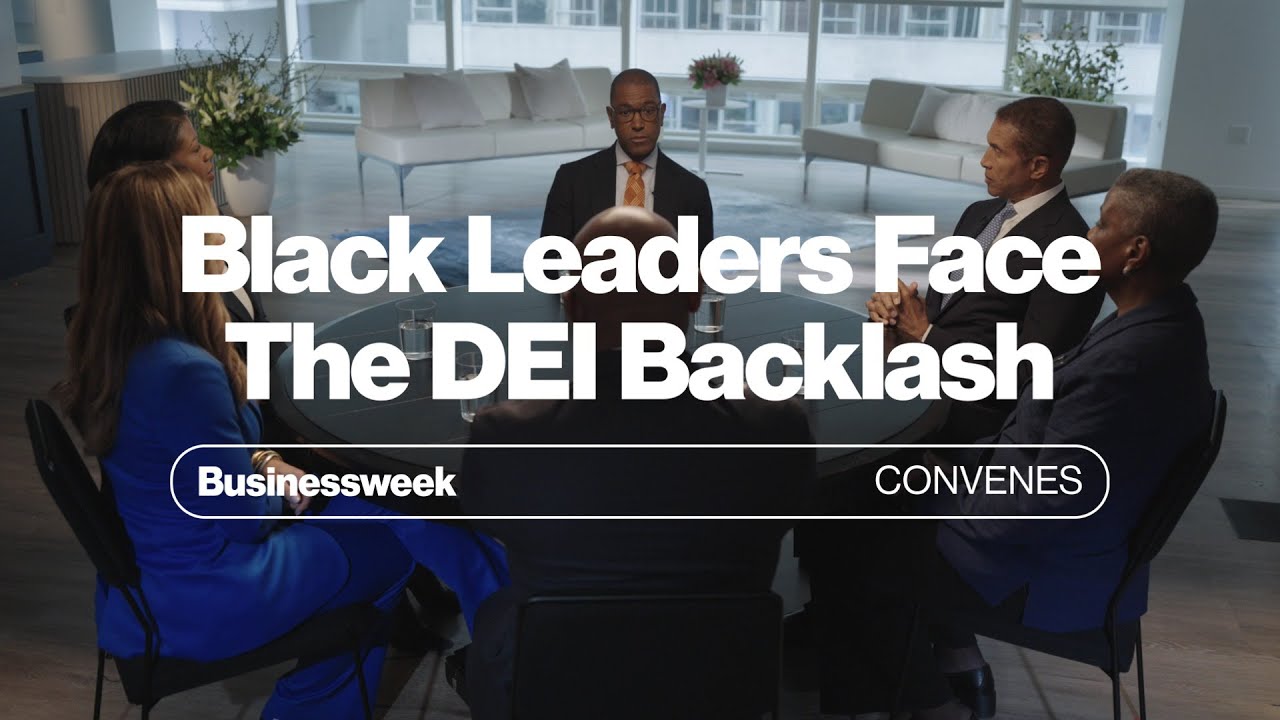
Summary: Bloomberg DEI Roundtable
A group of prominent Black executives convene to discuss the rollback of DEI initiatives across corporate America and government.
Key themes included:
-
DEI programs are being dismantled across institutions
-
Many corporations are retreating from prior commitments made post-2020
-
There is tension between “meritocracy” narratives and the reality that access determines performance opportunity
-
Executives acknowledged that:
-
many of them have already “made it”
-
but future generations may face reduced access
-
Several participants noted:
-
diversity has measurable business value (innovation, revenue)
-
corporations often acted reactively (post-George Floyd) rather than structurally
-
current political pressure is influencing corporate behavior
A recurring theme was:
 “We are survivors—but what about those behind us?”
And ultimately:
a call for resilience, mentorship, and continued engagement within existing systems
BWO’s Thoughts…..
What struck us immediately is not just what was said—but where it was said.
This conversation took place on Bloomberg.
Not on a platform owned, controlled, or built by the very people most impacted.
That, in itself, is part of the problem.
The discussion reflects a class of Black executives who have:
-
achieved success
-
accumulated wealth
-
gained access
Yet even within the conversation, there is an undercurrent of what can only be described as:
“survivor’s positioning”
They acknowledge:
-
they are insulated
-
they are “the protected class”
But the framework remains:
What happens when corporate America pulls back?
 Our Counterpoint at Black Wall Street Odds
The real question is not:
“Why is DEI being rolled back?”
The real question is:
Why is Black economic strategy still dependent on corporate approval?
 The Data Problem
Even within their own discussion:
-
it is acknowledged that DEI benefits were not exclusively—or even primarily—captured by Black Americans
-
other groups (notably white women) were often the largest beneficiaries
So we must ask:
Was DEI ever a reliable economic foundation?
 The Structural Issue
This summit still operates within a framework of:
 access to existing systems
corporate validation
institutional inclusion
But not:
 ownership
capital formation
independent infrastructure
 The BWO Position
If access can be removed:
it was never power
If opportunity depends on approval:
it was never ownership
The Missing Conversation
What is absent from this entire discussion is:
coordinated economic strategy
-
Where are the platforms?
-
Where is the capital pooling?
-
Where is the investment syndication?
-
Where is the ownership infrastructure?
 Final Point
If we cannot conceptualize and build:
our own economic ecosystems
Then conversations like this will continue to happen:
on platforms owned by others, about systems controlled by others, reacting to decisions made by others